
In most laboratories, you will find some testing applications which may require basic apparatus, below are some illustrations that might be useful. We have the experiences and knowledge to assist you in this aspect, so that you can focus on the importance things in work. We can help setup the apparatus needed for your lab work and ensure all consumables are in place and replenish at all time. With comprehensive online documentation, you can rest assure that we help you to keep track of all your purchases.
Items
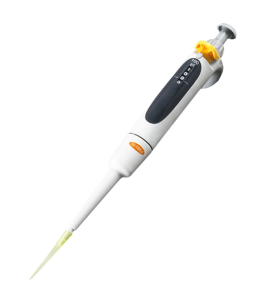
Adjustable Micropipette
Air displacement micropipettes are a type of adjustable micropipette that deliver a measured volume of liquid; depending on size, it could be between about 0.1 µl to 1,000 µl (1 ml). These pipettes require disposable tips that come in contact with the fluid.
The three standard sizes of micropipettes are: 0.5 to 10 µl, 10 to 100 µl and 100 – 1000 µl.
Volumetric Flask
A volumetric flask is a round flask with a long neck and flat bottom. It is used to measure an exact volume of liquid. There is a small line on the neck that indicates how far to fill the bottle (use the bottom of the meniscus). They come with special caps that will not let anything in or out.
Volumetric flasks are used for precise dilutions and preparation of standard solutions. These flasks are usually pear-shaped, with a flat bottom, and made of glass or plastic. The flask’s mouth is either furnished with a plastic snap/screw cap or fitted with a joint to accommodate a PTFE or glass stopper.

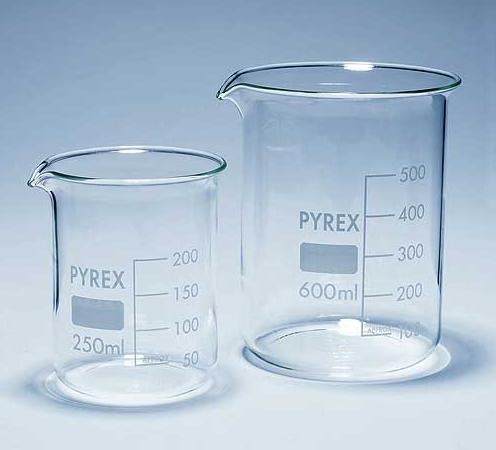
Beaker
A beaker is a common container in most labs. It is used for mixing, stirring, and heating chemicals. Most beakers have spouts on their rims to aid in pouring. They also commonly have lips around their rims and markings to measure the volume they contain, although they are not a precise way to measure liquids. Beakers come in a wide range of sizes.
Magnetic Stirrer
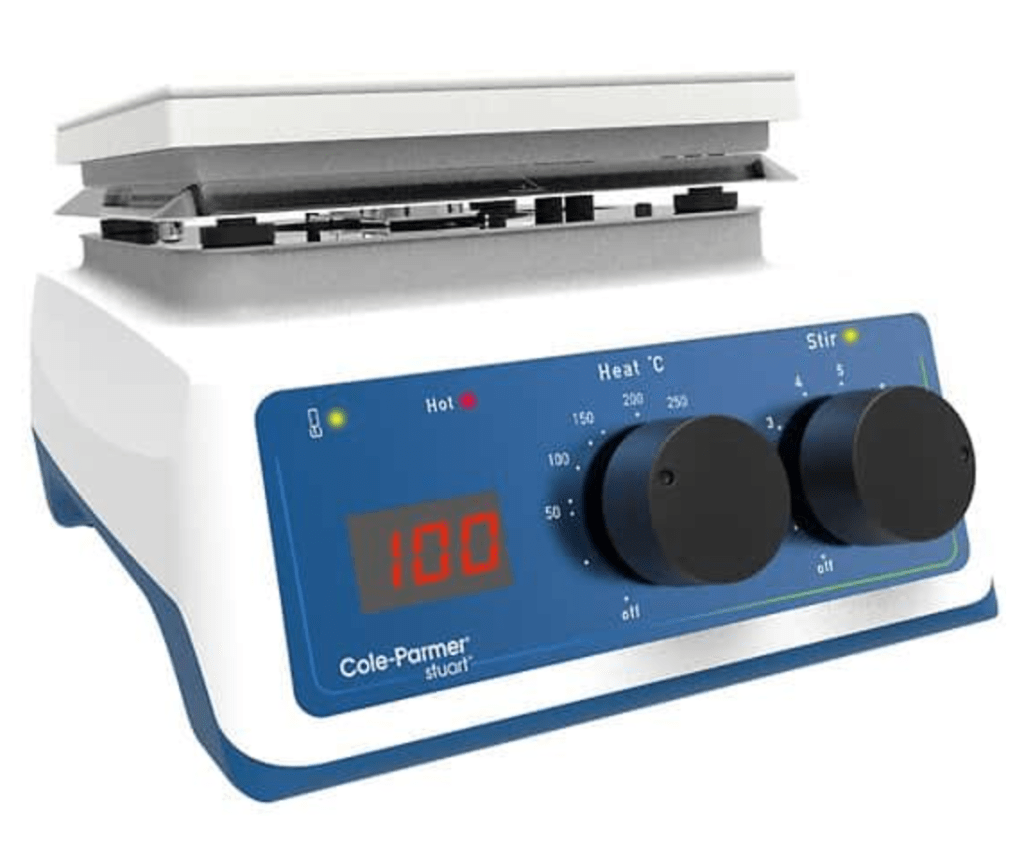
A magnetic stirrer or magnetic mixer is a laboratory device that employs a rotating magnetic field to cause a stir bar (or flea) immersed in a liquid to spin very quickly, thus stirring it. The rotating field may be created either by a rotating magnet or a set of stationary electromagnets, placed beneath the vessel with the liquid. It is used in chemistry and biology where other forms of stirring, such as motorized stirrers and stirring rods, may not be viable for use.
The hotplate stirrer (or hot plate stirrer or hot plate magnetic stirrer) is used for mixing and heating aqueous solutions for a great variety of chemical reactions such as synthesis.
The stir bar’s motion is driven by another rotating magnet or assembly of electromagnets in the stirrer device, beneath the vessel containing the liquid. Stir bars are typically coated in PTFE, or, less often, in glass; the coatings are intended to be chemically inert, not contaminating or reacting with the reaction mixture they are in. It comes with various sizes for different stirring capacity.
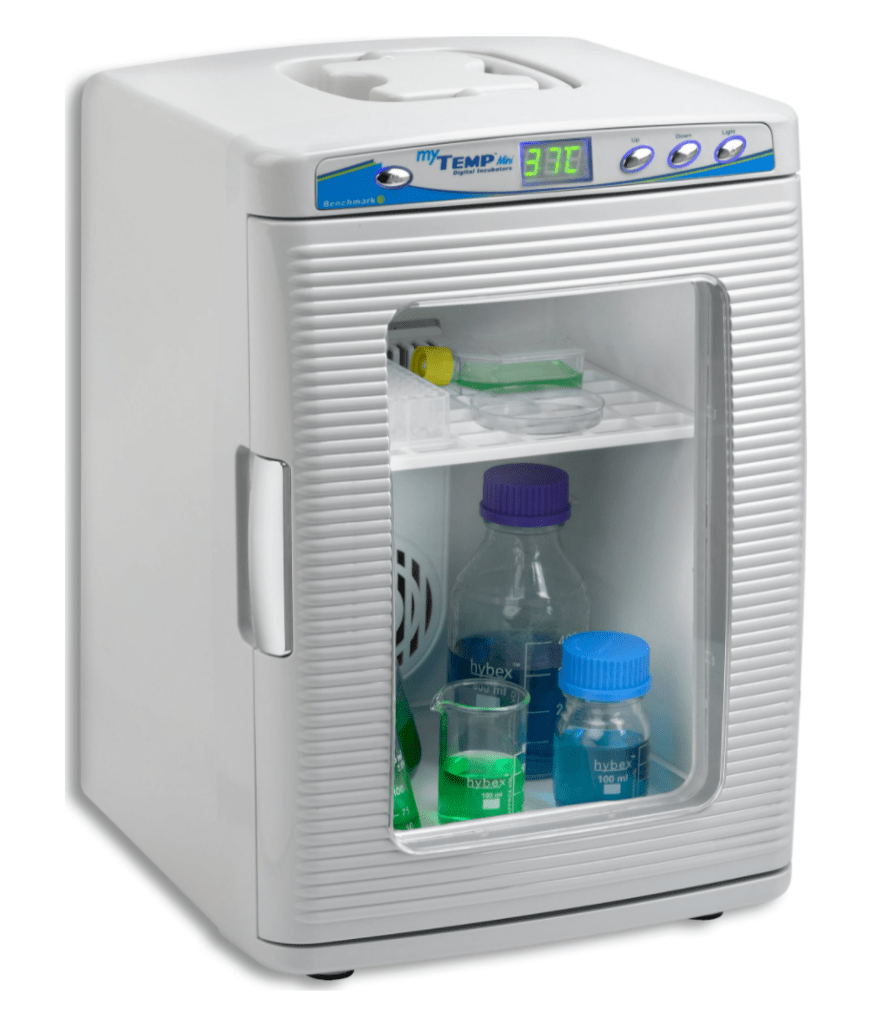
Incubator
The simplest incubators are insulated boxes with an adjustable heater, typically going up to 60 to 65 °C (140 to 150 °F), though some can go slightly higher (generally to no more than 100 °C). The most commonly used temperature both for bacteria such as the frequently used E. coli as well as for mammalian cells is approximately 37 °C (99 °F), as these organisms grow well under such conditions
Oven
Laboratory oven is used for high-volume thermal convection applications. This provides uniform temperature throughout the chamber necessary for annealing, dying, sterilizing, and other industrial lab functions. Typical sizes are from one cubic foot (28 liters) to 32 cubic feet (906 liters) with temperatures that can reach 300°C (572°F).

 H2O Engineering & Trading